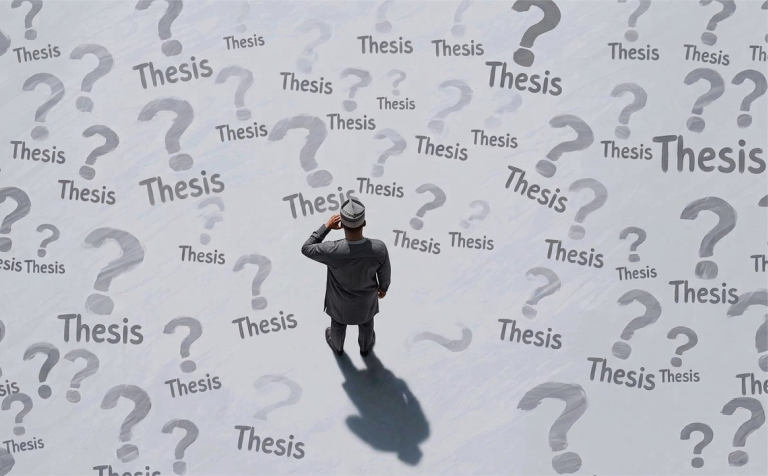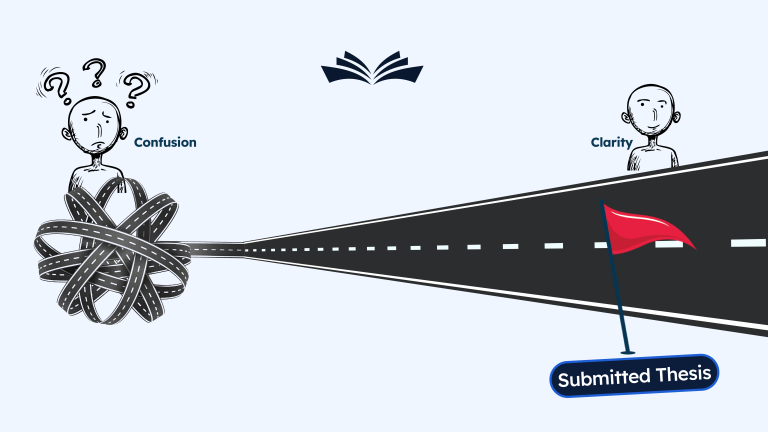
Why Your Thesis Still Feels Stuck, Even With Every Tool Open
You sit down to write, but before you type a word, you’re back in Zotero looking for a source you know you saved. Then a Notion tab, to check if you already wrote this point somewhere. Then scrolling an old ChatGPT thread, trying to remember what you asked it last time and whether you ever got a straight answer.
Fifteen minutes gone, and you haven’t written a sentence.
This is the part nobody warns you about. You’ve probably got more thesis research tools open right now than you did last semester, and the problem is that none of them know what the others are doing, and neither do you, most days.
The Real Problem Isn’t Your Tools. It’s That Nothing Remembers Where You Are.
Here’s what that actually looks like, day to day:
You start a new AI chat because the old one got long, and now you’re re-explaining your topic and methodology from scratch, again. You highlight a source in your citation manager, fully intending to come back and connect it to your argument, and six weeks later you couldn’t say which chapter it belongs to. You hit a wall in chapter three and go looking for a better template, when the actual issue is you haven’t decided what the chapter is arguing yet.
None of these are failures on your part. They’re what happens when your research lives in five places that don’t talk to each other, and the only thing holding it all together is your memory, which was never built to be the connective tissue for a two-year project.
Your memory was never built to be the connective tissue for a two-year project.
What Actually Fixes This
It’s not fewer apps. Your citation manager, your word processor, your grammar checker, none of that needs to go (at least not yet). What’s missing is something that knows where you are in the process and picks up from there, instead of treating every session like day one.
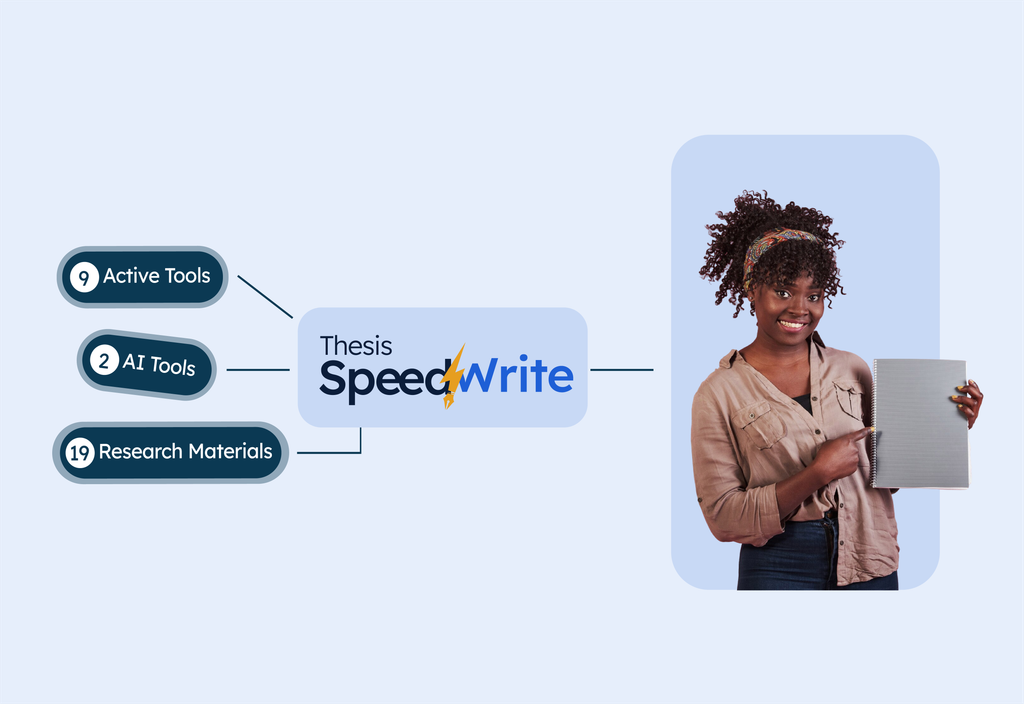
That’s the specific gap Thesis SpeedWrite is built to close. It doesn’t generate your thesis and it doesn’t make your methodology or interpretation decisions for you, those stay yours, always. What it does is walk with you stage by stage: narrowing a topic, structuring a methodology, working through your data, building out a chapter, and it holds the context of where you left off, so you’re not reopening six tabs and reconstructing your own thinking every time you sit down.
If you’ve read how to start your thesis when you don’t know where to begin, this is the same idea one layer up, instead of relearning the starting point each session, the tool already knows it.
Think of it less as one more tool in the stack, and more as the thread that runs through the ones you already use.

So What Do You Actually Do Differently: 3 Shifts That Save Your Momentum
Three small shifts, starting today:
- Pick one place your decisions live. Not your sources, your actual reasoning. Why this source matters to this argument. Somewhere that isn’t your memory.
- Stop restarting your AI conversations. If you’re re-explaining your topic every time, that’s lost time, not a fresh start. Find a way to keep the context running.
- Catch “I need a new tool” before you act on it. Ask first: is this a tool gap, or is it that I haven’t made a decision yet? Usually it’s the second one.
Where to Start
If today’s fifteen minutes went to relocating things instead of writing, that’s worth fixing before you add anything else to your stack. Thesis SpeedWrite is built to hold your place in the research process, so each session starts where the last one left off, not from zero. Take a look at where you’re stuck right now, and see what picking up from there actually feels like.
FAQ
Are thesis research tools actually the problem, or is it something else?
Something else, usually. Most students already have enough tools. What’s missing is a way to keep decisions and context connected across all of them.
How many thesis research tools should I actually be using?
There’s no fixed number. The question isn’t quantity, it’s whether each tool knows what the others are doing, or whether you’re the only thing holding them together.
Can AI tools replace the thinking part of thesis research?
No, and that’s by design. AI can help you brainstorm, organize, and clarify, but the methodology decisions, the interpretation of your data, and the argument itself have to come from you. That’s what makes it your thesis.
What’s the first thing to fix if I feel scattered across too many apps?
Find where you’re losing the most time to re-orientation, usually restarting AI chats or hunting for where a source connects to your argument. Fix that one thing first.