Thesis Editing: 5 Proven Checks to Avoid Costly Mistakes
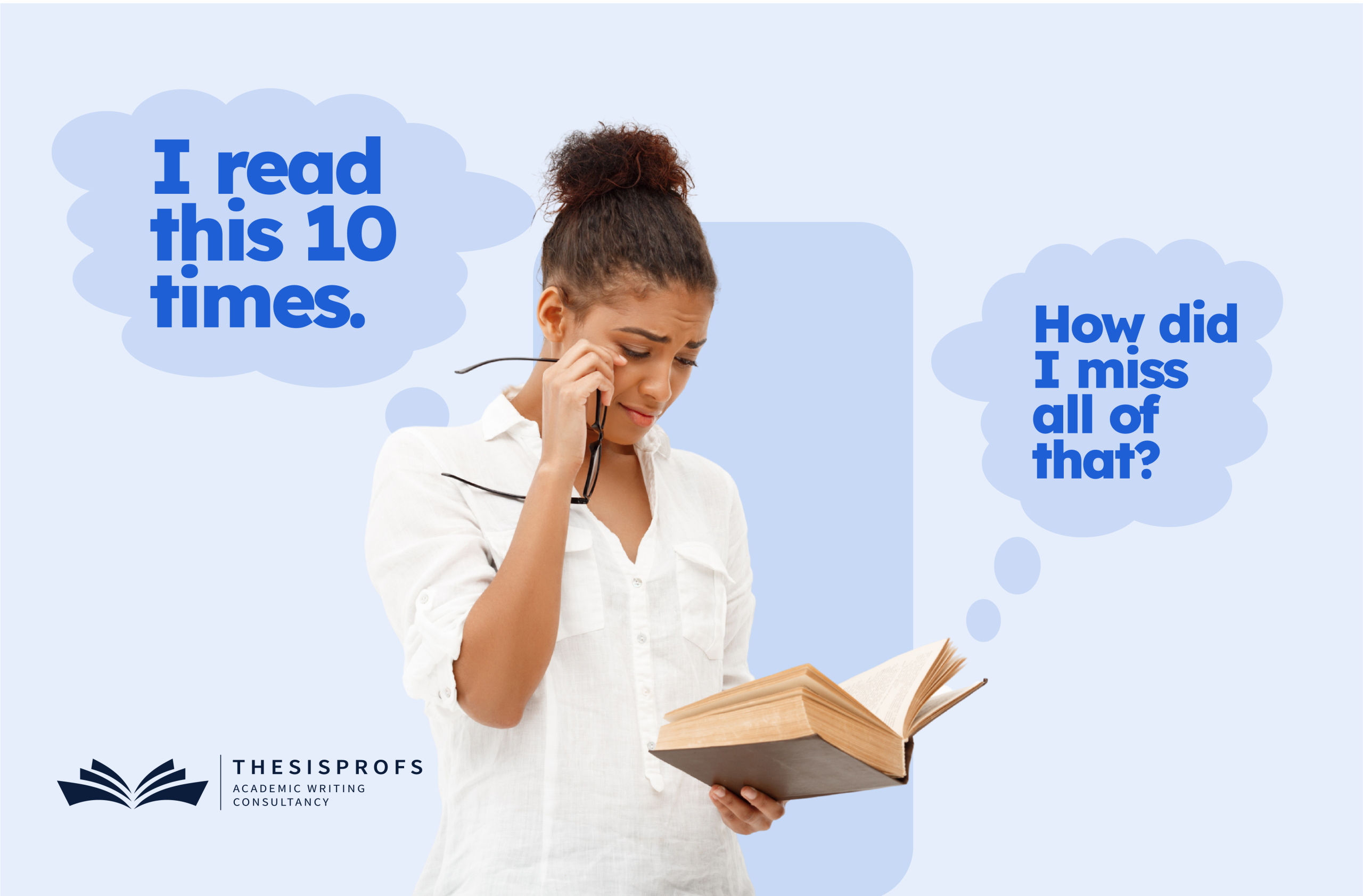
Ada sent her draft to her supervisor on a Sunday night. She had read it ten times and thought it was clean.
The reply came on Thursday with 41 comments. Three citations had no entry in the reference list. Her research question changed wording between Chapter 1 and Chapter 4. One paragraph in her discussion contradicted her abstract. She read this draft ten times, yet she saw none of it.
That gap is what thesis editing is for: reading your work the way your examiner will, cold and critical, with no memory of what you meant to say.
Why You Can’t See Your Own Mistakes
After months with the same pages, your brain reads what you intended to write, and naturally you skip the gap in the argument because you already think you know what fills it, or miss the typo because you already know how the sentence ends.
Every writer has this limit. It’s why journals have reviewers and books have editors.
5 Thesis Editing Checks to Run Before You Submit
Do these in order. There’s no point polishing sentences in a section you may still restructure.
1. Step away for a week
Even a few days helps. You return as a reader instead of the author, and problems jump out.
2. Read only the first sentence of each paragraph
If the argument doesn’t hold together from those sentences alone, the chapter needs restructuring.
3. Line up your questions, methods, and findings
Trace each research question forward. Which method answers it? Which finding responds to it? A question with no matching finding is one of the most common things examiners flag.
4. Print it and read it aloud
Your eyes glide over errors on a familiar screen. Your ears catch the sentence that runs six lines.
5. Audit every citation
Match each in-text citation to the reference list, and each reference back to the text. It’s tedious, and it’s where careful students still lose marks.
When to Bring in a Professional Editor
Self-editing gets you far, but it can’t remove the blind spot. Bring in a professional thesis editing service when you’ve revised so many times you no longer trust your own eyes, when English is your second language, or when the deadline is close and errors would be costly.
A good editor improves how your research reads. The findings, the argument, and the ideas stay yours, and yes most universities allow language and formatting support and restrict changes to content, so confirm your institution’s policy first.
That’s what Editer does. It is Thesisprofs’ professional academic editing service: a trained second reader who catches what you can’t and returns your work in your own voice.
Get Guidance Before You Submit
Months of work shouldn’t be undone by errors you were too close to see.
Use Thesisprofs Editer to find the structural gaps. When you want a trained second reader, Editer will polish how your research reads, with your ideas and voice untouched.