
How to Write Chapter 3 of Your Thesis (Without Getting Stuck)
Quick answer: Chapter 3, your methodology chapter, explains how you’ll answer your research question: your research design, population and sample, data collection instruments, procedure, and data analysis plan. Most students stall here because they try to choose a method before they’ve clarified what their research question requires them to find out. Fix that order, and the rest of the chapter follows almost on its own.
If you’ve been staring at a blank page trying to figure out how to write Chapter 3 of your thesis, you’re not behind. This is the point in a thesis where most students slow down, for reasons that have nothing to do with how smart or capable they are. It’s also the chapter where the work quietly shifts from “find and summarize what’s already known” to “decide, defend, and be accountable for a choice nobody else can make for you.” That shift catches people off guard, even strong writers who breezed through Chapters 1 and 2. Here’s why it happens, what the chapter actually needs, and exactly how to move through it.
Table of Contents
Why Chapter 3 Feels Harder Than Every Other Chapter

Chapters 1 and 2 reward reading.
Chapter 3 rewards judgment.
By this point, you’ve picked a topic and reviewed the literature, and both of those require gathering and organizing information you can look up. Chapter 3 asks something different: you have to commit to a method and be ready to defend that choice, before you’ve even collected data.
Three things make this genuinely harder than earlier chapters:
- There’s no single correct answer. A method has to fit your specific research question, not just be common in your field. Two students studying the same broad topic can land on completely different, equally defensible designs, and that ambiguity is exactly what makes the chapter feel slippery.
- Every decision creates more decisions. Choose a sample size, and now you need to justify it. Choose an instrument, and now you need to prove it’s valid. There’s no natural stopping point where the justifications end, which is part of why the chapter can feel like it expands the longer you sit with it.
- The stakes feel permanent. Chapter 3 is the foundation the rest of your thesis sits on. If it’s weak, it usually doesn’t get caught in the writing itself, it gets caught in the defense, when a committee member asks why you chose this sample size or this instrument, and “it seemed reasonable” isn’t an answer that holds up.
What Chapter 3 Actually Needs to Include
Most methodology chapters, across disciplines, need to answer the same core questions:
- Research design. Is this qualitative, quantitative, or mixed methods, and why does your question require that approach? This is the decision everything else in the chapter hangs off of, so it comes first.
- Population and sample. Who or what are you studying, and how did you choose them? A committee will want to know not just who’s in your sample, but why that group and not a different, arguably easier one to access.
- Instrumentation. What tool are you using to collect data (survey, interview, test, existing dataset), and why is it valid for this question? If you’re adapting an existing instrument, this is also where you note that and briefly explain why it still fits your context.
- Data collection procedure. Step by step, how will data actually be gathered? Write this as a sequence you could hand to someone else and have them replicate.
- Data analysis plan. What will you do with the data once you have it? Naming the specific technique (a particular statistical test, a coding approach for qualitative data) matters more here than describing it in general terms.
- Ethical considerations. Consent, confidentiality, and any approvals required, including anything your institution’s ethics or review board needs to sign off on before you can collect a single response.
If you can write one clear sentence for each of these, you already have the skeleton of the chapter. Everything else is expansion.
A Quick Example: How the Research Question Drives the Design
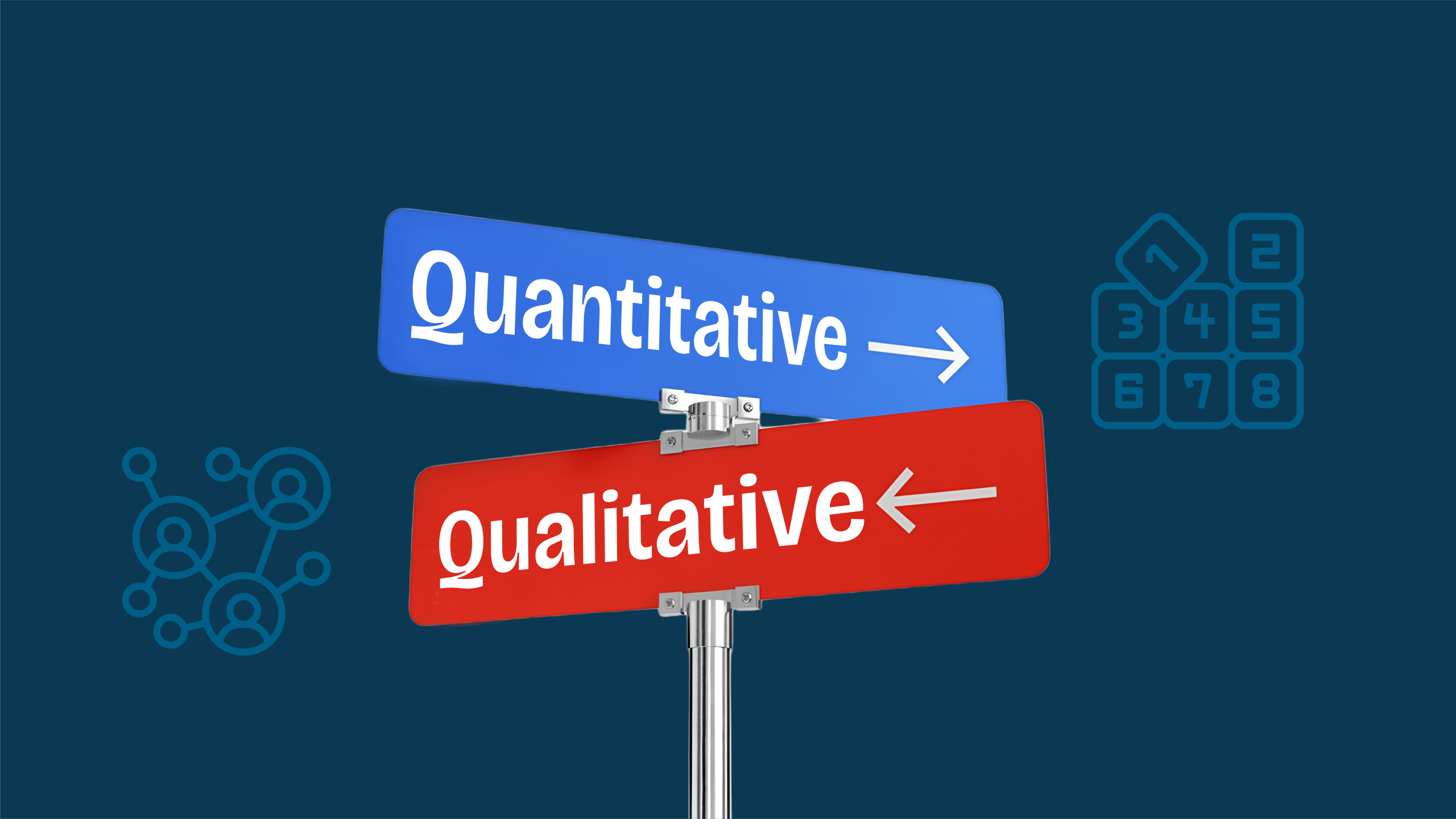
This is where how to write Chapter 3 of your thesis stops being abstract and starts being concrete. Say your research question is:
“What is the relationship between remote work hours and reported job satisfaction among mid-level managers?”
That’s a question about measuring a relationship between two variables across a group of people, so it points toward a quantitative design: a survey instrument, a defined sample of managers, and a statistical test built to detect correlation.
Now compare that to:
“How do mid-level managers experience the transition to remote work?”
That question isn’t asking for a measurable relationship. It’s asking about lived experience, meaning, and interpretation, which points toward a qualitative design: interviews or focus groups, a smaller and more purposefully chosen sample, and a coding or thematic analysis approach instead of a statistical one.
Same general topic, two different questions, two legitimately different Chapter 3s. Once you can see that pattern in your own question, most of the rest of the chapter is just following it through.
The Most Common Chapter 3 Mistakes
Here are the patterns that come up most often when you’re working out how to write Chapter 3 of your thesis:
- Choosing a method before finalizing the research question. This is the single biggest cause of stalled methodology chapters. Students often decide “I’ll do a survey” or “I’ll do interviews” out of comfort or familiarity, then try to retrofit a research question to match. The method should follow from the question, not the other way around, and a committee can usually tell when it’s been done backward.
- Copying a method because it’s common in the field, without connecting it back to your specific study. Seeing a method used often in published research in your area is a reasonable starting point, but it’s not a justification on its own, you still have to explain why it fits your question.
- Under-justifying the sample size or sampling method. “It’s a reasonable number” isn’t a justification a committee will accept. Even a rough calculation, or a clear explanation of how you arrived at the figure, is stronger than an unsupported round number.
- Skipping the link between research questions and analysis method. Every research question should map to a specific way you’ll analyze the data. If you can’t point to which analysis answers which question, that’s usually a sign the plan isn’t finished yet.
- Writing the chapter in the wrong order, trying to write it top to bottom instead of nailing down the design decisions first. Full paragraphs are much easier to write once the underlying decisions are already made, so drafting prose before the decisions are settled tends to produce a chapter that has to be rewritten anyway.
How to Write Chapter 3 of Your Thesis, Step by Step

- Restate your research question(s) at the top of your planning document. Everything else in the chapter has to trace back to this.
- Decide your research design based on what the question actually requires you to find out. Patterns and relationships point to quantitative. Depth and meaning point to qualitative. Both point to mixed methods.
- Define your population and sampling method, and write one sentence justifying why this sample can answer your question.
- Choose your instrument, and note briefly why it’s valid and reliable for this specific study.
- Outline your data collection procedure as a simple numbered sequence. This becomes your procedure section almost as-is.
- Match each research question to a specific analysis method. This single step prevents most Chapter 4 headaches later.
- Add your ethical considerations: consent process, confidentiality, and any institutional approval needed.
- Now write the full chapter, expanding each of the above into full paragraphs, in this order.
Writing the chapter last, after these decisions are settled, is what actually makes it fast to write. Once your methodology’s locked in, the next wall most students hit is when the data doesn’t cooperate with what they expected to find, but that’s a problem for a later stage, not this one.
What to Do If Your Advisor Sends Chapter 3 Back

Getting a Chapter 3 draft returned with comments is common enough that it shouldn’t be read as a sign you did something wrong. It also often reveals whether you’ve actually worked out how to write Chapter 3 of your thesis or just gotten the format right. What matters is how you handle the revision.
Start by sorting the feedback into two piles: comments about wording and structure, and comments about the actual decisions (the design, the sample, the instrument, the analysis plan). Wording fixes are quick. Decision-level feedback is the kind worth slowing down for, because it usually means one of the six core components isn’t justified clearly enough yet, not that the whole chapter needs to be rewritten.
Then go back to whichever of the six components the feedback is pointing at, and ask the same question again: does this choice clearly follow from the research question? If you can answer that in one sentence, the fix is usually just adding that sentence to the chapter. If you can’t, that’s worth a conversation with your advisor before you revise, rather than guessing at what they meant.
How Thesisprofs Makes This Stage Easier
This is exactly the stage SpeedWrite is built to support. It doesn’t generate Chapter 3 of your thesis for you. Instead, it walks you through the same decisions in the order they actually need to be made: research design, sampling, instrumentation, and analysis planning, so each choice has a clear justification before you write a single paragraph. Combined with one-on-one coaching for the harder judgment calls, it’s designed specifically to get you unstuck at this exact point, not to produce text on your behalf.
If you’re mid-decision right now and not sure how to write Chapter 3 of your thesis in a way you can actually defend, that’s the exact gap it’s built to close.

Frequently Asked Questions
What is Chapter 3 of a thesis?
Chapter 3 is the methodology chapter. It explains your research design, population and sample, data collection instruments, procedure, and analysis plan. Put simply, that’s how to write Chapter 3 of your thesis in a way that actually answers “how will you find the answer to your research question?”
How long should Chapter 3 of a thesis be?
Length varies by discipline and institution, but most methodology chapters run 15 to 25 pages for a master’s thesis and can be longer for a PhD, depending on how much justification each section requires.
What’s the difference between research design and methodology?
Research design is the overall strategy (qualitative, quantitative, or mixed methods), while methodology is the full explanation of how that design will actually be carried out: sample, instruments, procedure, and analysis.
Can I change my methodology after Chapter 3 is approved?
It’s possible but usually requires committee approval and a clear justification, since changes here can affect earlier chapters and later analysis. It’s best to resolve major decisions before submitting the chapter for approval.
Why do supervisors reject Chapter 3 drafts so often?
Most rejections come from under-justified decisions: a method chosen without a clear link to the research question, or a sample size without reasoning behind it, rather than the writing itself being weak.
If you want structured, step-by-step support with how to write Chapter 3 of your thesis, that’s exactly the stage SpeedWrite is built for. It won’t write the chapter for you. It’ll walk you through each decision, in order, with a research coach to help you reason through the judgment calls no AI tool should be making for you. And once your methodology is solid, Editer is there for the polish pass before it goes to your committee.





2 Comments